August 2026 Issue
Beyond the Green Wall
What late summer is showing us—from maypop passionfruit to the patient practice of seeing a whole plant.
Late summer has a way of making the familiar landscape feel almost tropical. Vines climb fence lines, fruit begins to carry real weight, and the edges between field and forest become some of the most interesting places to slow down.
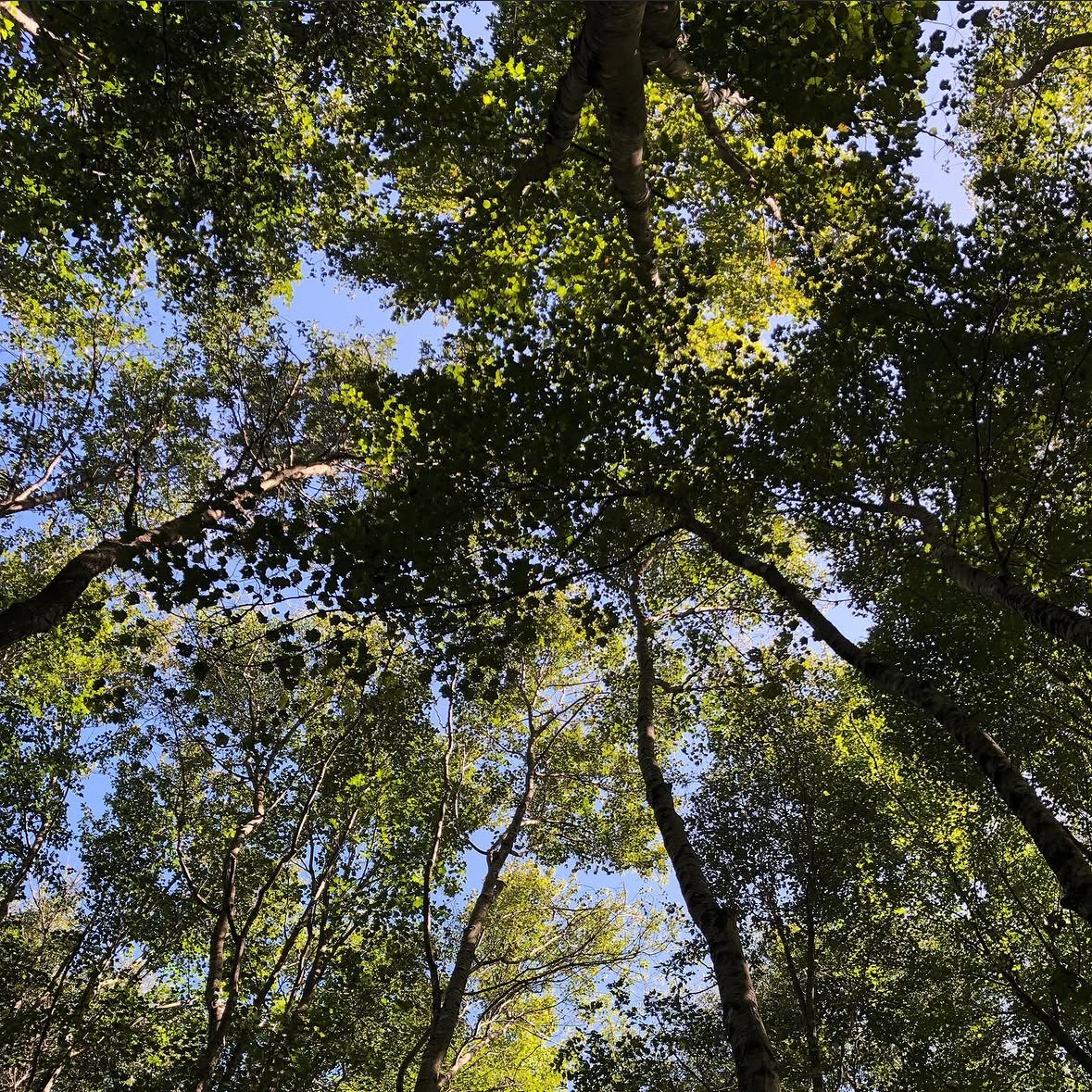
This month, I want to invite you to stop treating the green around you as a wall. Look for individual shapes. Notice where a vine begins, what it climbs, how its leaves meet the stem, and what else shares the habitat. The goal is not to gather everything you see. The goal is to become a better observer.
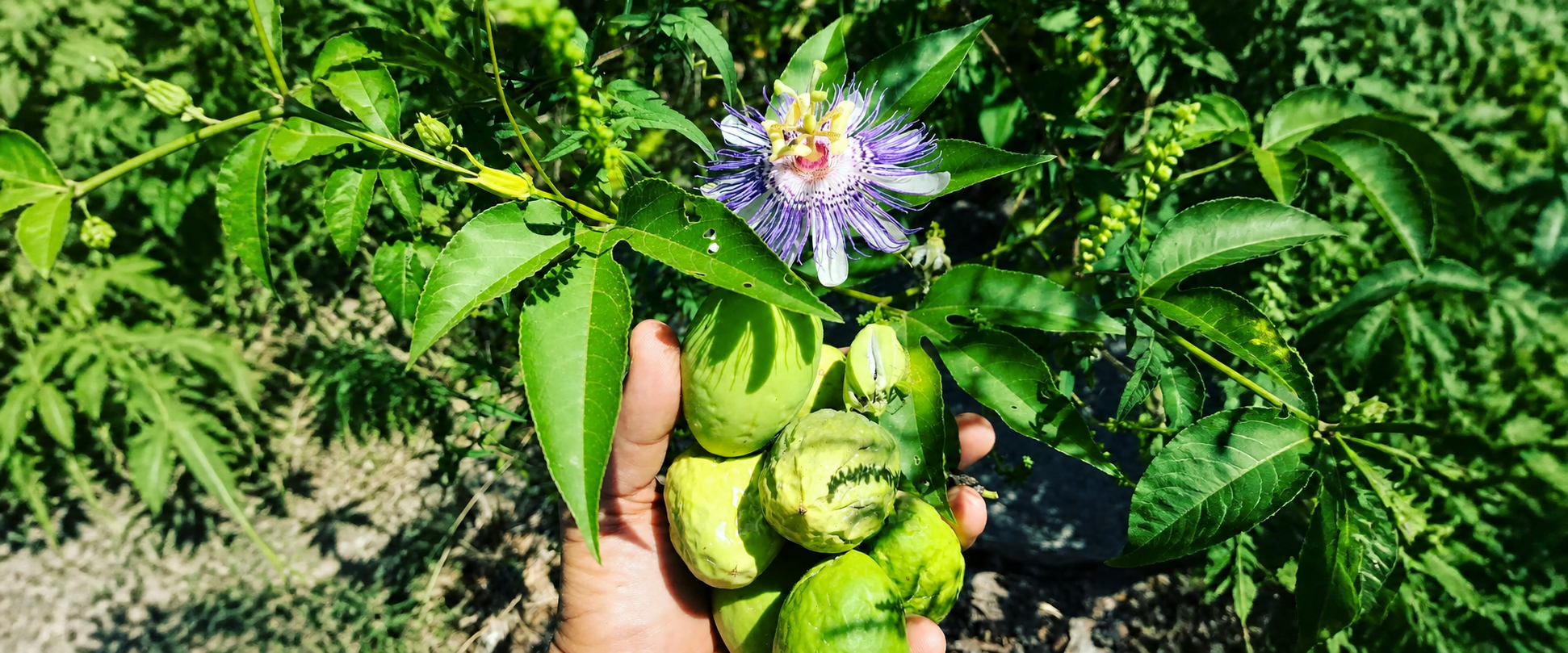
In season: maypop passionfruit
Maypop passionfruit is one of the Southeast’s most memorable native vines when its intricate purple-and-white flowers are open. Later, it carries rounded green fruit that many people recognize without knowing what it is.
Do not let the fruit alone make the identification. Learn the whole plant: its three-lobed leaves, coiling tendrils, flower structure, growth habit, and habitat. Fruit is best left to mature fully; patience is part of the practice.
Before anything goes in the basket
- Be completely certain of the identification.
- Cross-check more than one reliable source.
- Confirm that collection is legal and permitted.
- Avoid roadsides, drainage areas, sprayed ground, and polluted sites.
- Leave uncommon native plants and small populations alone.
- If anything feels uncertain, walk away.
From the book fieldwork
The forthcoming field guide continues to take root. It is built around Georgia’s varied habitats and the practical patterns that help people recognize plants with greater confidence. The title remains under wraps for now, but I will share more of the process here as publication approaches.
Events and private learning
There are no upcoming public events currently. Public walks and workshops will be posted as they are confirmed. Private experiences are considered by inquiry and remain limited by season, location, group needs, weather, and availability.
Keep looking closer.
— Robert Silas
Safety note: This newsletter is educational and is not a substitute for in-person instruction or positive identification. Never consume a wild plant unless you are fully certain of its identity, the correct usable part and preparation, the cleanliness and legality of the harvest site, and your individual safety considerations.